Tired of Duke Energy bills? Here is what NC homeowners can actually do
Duke Energy in North Carolina is really two utilities, and the solar rules changed in 2023. This page lays out what the NC Utilities Commission has approved, how rooftop solar is credited now, and where batteries and generators fit after Helene.
Start your solar request
Enter your ZIP code. It takes about five minutes and it is free.
- Free to post
- No obligation
- Your address stays private
Do this kind of work? Sign up as a contractor
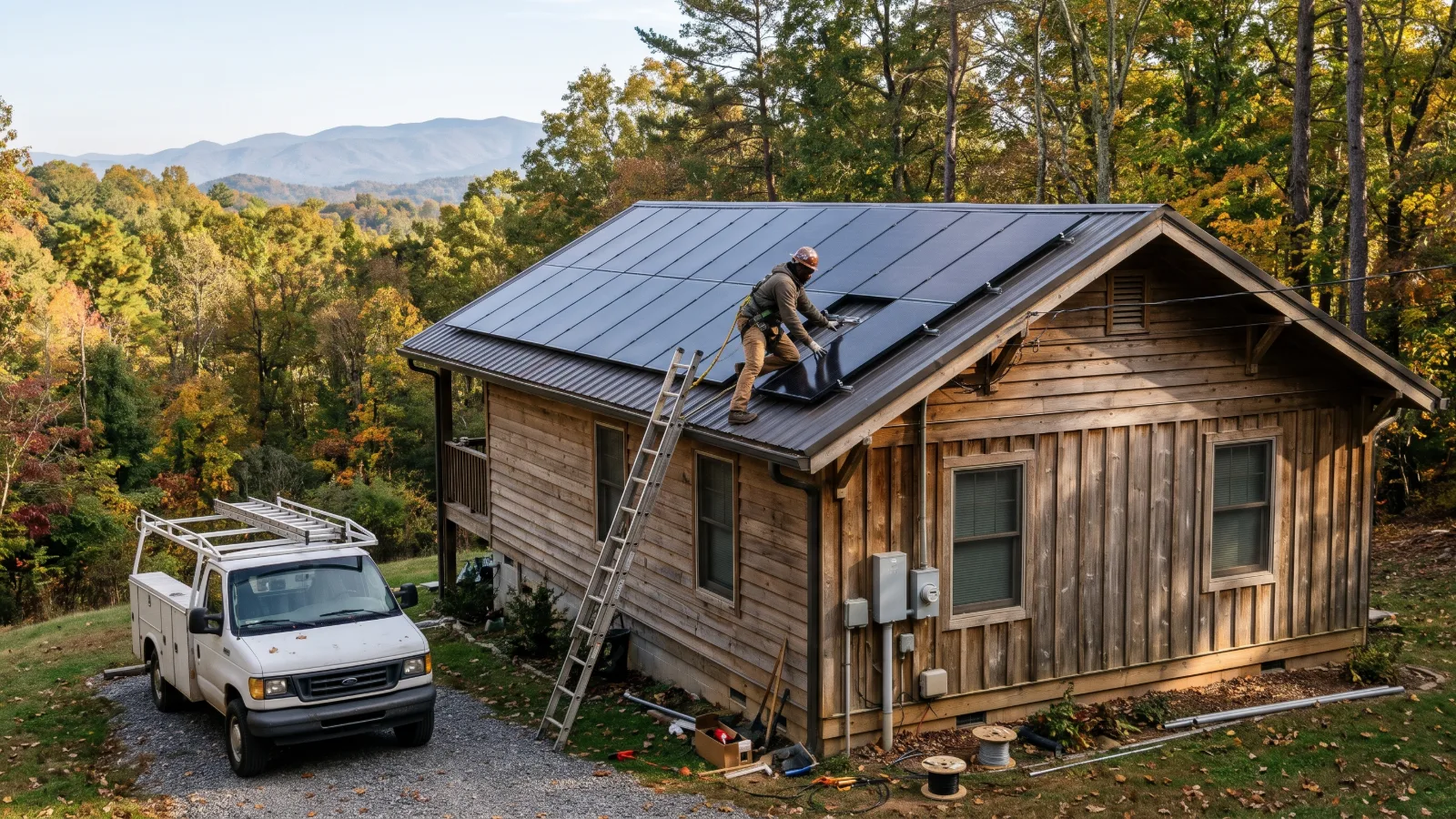
Two Duke companies serve western North Carolina
Duke Energy in North Carolina is two regulated utilities. Duke Energy Progress serves the Asheville area in the mountains along with much of eastern NC. Duke Energy Carolinas serves central and western NC, from the Triad to Charlotte and into the mountains, including the southwestern counties once served by Nantahala Power and Light. Your bill says which one you have, and it matters because rates, hearings and some solar details differ.
Both are investor-owned and their North Carolina rates are set by the NC Utilities Commission. In spring 2026 the Commission approved combining the two companies, and Duke plans to run them as one utility starting January 1, 2027. Duke has said separate rates stay in place for now.
What the Utilities Commission has approved
In August 2023 the Commission approved a multiyear increase for Duke Energy Progress of about 11.3 percent in total, phased in over three years. In December 2023 it approved a three-year increase of 14.6 percent for Duke Energy Carolinas, with the first step in January 2024. Both orders came under the 2021 state energy law that allows multiyear rate plans with performance incentives.
Duke filed again in late 2025, asking for residential increases of roughly 18 percent for Progress and about 16 percent for Carolinas over two years starting in 2027. Public hearings in spring 2026 included Waynesville for Progress customers and Morganton for Carolinas customers. Over the summer Duke reached settlements with the Commission's Public Staff that would cut the residential increases to about 6.8 percent for Progress and about 9.5 percent for Carolinas over two years. The Attorney General declined to sign. The Commission makes the final call, so check docket E-2, Sub 1380 (Progress) or E-7, Sub 1329 (Carolinas) for the outcome.
How Duke credits rooftop solar now
In March 2023 the Commission approved new net metering tariffs for Duke. The old Rider NM closed to new residential applications after September 30, 2023. Homeowners applying since October 1, 2023 choose between two riders.
- Residential Solar Choice (Rider RSC). You must take a time-of-use rate with critical peak pricing. There is a monthly minimum bill, non-bypassable charges such as storm recovery that you pay regardless of solar output, and a grid access fee for systems over 15 kW AC. Net exports each month are credited at Duke's avoided cost rate, which is below the retail rate.
- Net Metering Bridge (Rider NMB). Similar to RSC but without the time-of-use requirement. Only a limited number of customers can enroll each year, and you can stay up to 15 years. When the yearly cap fills, new customers go on RSC.
Customers still on legacy Rider NM are scheduled to move to the bridge rider automatically on December 31, 2026. If you went solar before October 2023, ask your installer what that change means for your bill.
The practical effect: solar now pays best when you use the power in your own house as it is made, or store it in a battery for the evening. Oversizing a system to export a big surplus makes less sense than it did a few years ago. That is a calculation, not a sales pitch, and it depends on your actual monthly kWh.
PowerPair and home batteries
Duke's PowerPair pilot, approved by the Commission in January 2024, offers a one-time incentive to North Carolina residential customers who install solar and a battery together. The installer must be a Duke Energy Trade Ally, and you enroll under RSC or the bridge rider. Bridge rider customers also enroll the battery in a Duke program that can adjust it at times in exchange for bill credits. Ask your contractor whether PowerPair still has capacity.
Helene showed what a long outage looks like
Hurricane Helene in late September 2024 took down power across the mountains. About a week after the storm, roughly 200,000 Duke customers in western NC were still without power. The substation on Swannanoa River Road that serves Biltmore Village had to be torn down and rebuilt. Duke's restoration updates named Buncombe, Rutherford, McDowell and Avery among the hardest-hit counties.
For a lot of households the lesson was simple. A well pump, a freezer and medical equipment need power that does not depend on the lines. Grid-tied solar alone shuts off when the grid goes down, so backup means a battery, a generator, or both.
Why start with a paid evaluation
Getting a solar contractor to return a call out here can take weeks. On HomeBackupPros you can book a home energy evaluation for $349: an electric audit, a review of how you use power, and a written quote for a system. If you buy the system from that same contractor, the $349 is credited toward the price. Contractors can also offer a free site visit or send an estimate, and you choose.
Every contractor is reviewed and approved by our team before they can respond, and we check their NC electrical contractor license number. They are independent businesses. HomeBackupPros does not install anything and does not employ them.
Bring 12 months of kWh from your Duke bill, note whether heat, water and cooking are electric or gas, and tell us the goal: lower bills, a few days of backup, a whole home generator, or going off grid.
Where Duke Energy serves in our area
- Asheville and the Asheville area (Duke Energy Progress)
- Buncombe County (Duke Energy Progress, alongside co-ops in some areas)
- Charlotte and Mecklenburg County (Duke Energy Carolinas)
- Greensboro and the Triad (Duke Energy Carolinas)
- Southwestern mountain counties once served by Nantahala Power and Light (Duke Energy Carolinas)
Questions
Which Duke Energy company serves my house?
Look at the top of your bill. It will say Duke Energy Progress or Duke Energy Carolinas. In the mountains, Progress serves the Asheville area and Carolinas serves much of the rest of Duke's western NC territory, including the southwestern counties. Rates, rate cases and a few solar details differ, so it is worth knowing which one you have before you get a solar quote.
Can I still get net metering with Duke in North Carolina?
Not the old version for new systems. Applications received after September 30, 2023 go on Residential Solar Choice, which requires a time-of-use rate, or on the Net Metering Bridge rider, which has a yearly enrollment cap. Both credit monthly exports at Duke's avoided cost rate. A contractor can model both against your actual usage.
Will solar panels keep my power on during an outage?
Not by themselves. A grid-tied solar system shuts down when the grid goes down so it does not send power onto lines crews are working on. To keep a well pump, fridge or furnace fan running you need a battery, a generator, or both, sized to the loads you choose.
Is Duke's PowerPair incentive still available?
PowerPair is a Duke pilot for North Carolina residential customers who install solar and a battery together through a Duke Trade Ally installer. It has limited capacity and the terms can change. Ask your contractor whether PowerPair still has capacity before you count on it in your numbers.
Did Duke raise rates again?
The Utilities Commission approved multiyear increases for both Duke companies in 2023. Duke filed new requests in late 2025, and settlements reached with the Public Staff in summer 2026 proposed smaller increases starting in 2027. The Commission makes the final decision, so check the NCUC docket for the current status.